How to Choose an Interior Designer in Hong Kong
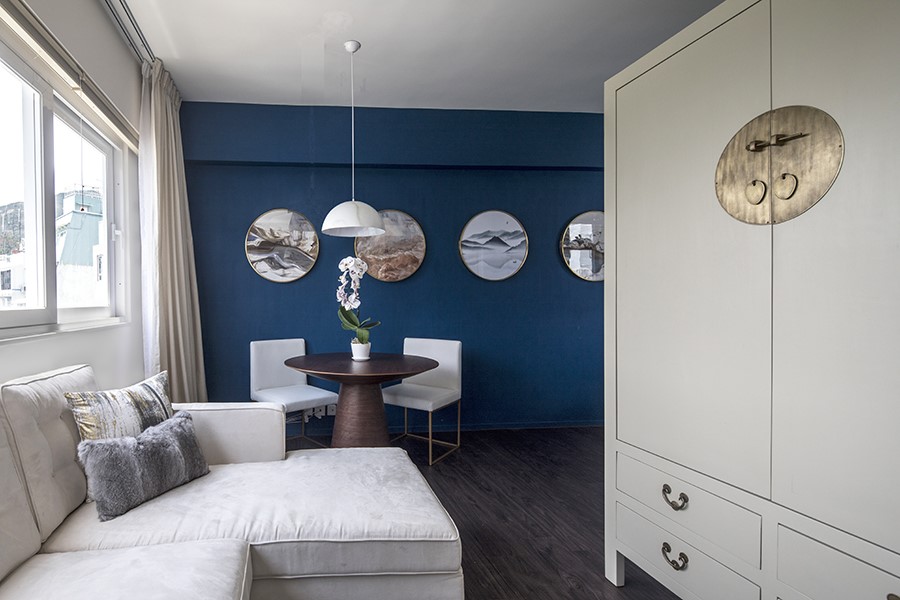
Choosing an interior designer in Hong Kong is difficult because most homeowners are not simply buying a design.
You are choosing a team that may be responsible for space planning, drawings, material selection, quotations, custom cabinetry, construction coordination and months of communication before your home is finished.
A beautiful Instagram portfolio tells you something.
But it does not tell you everything.
A more useful way to compare interior design companies is:
Project fit → design capability → quotation scope → communication → construction management → payment structure → aftercare.
The best designer is not necessarily the most famous, the cheapest or the one whose first rendering looks best.
It is the company that fits your property, budget, design expectations and preferred way of working.
1. Start with your project, not a list of “best interior designers”
Searching for the “best interior designer in Hong Kong” sounds logical.
The problem is that there is no single best company for every homeowner.
A firm that excels at large luxury homes may not be the best choice for a compact apartment with a tightly controlled budget.
A highly design-led studio may suit someone who wants a distinctive home, but be unnecessary for an owner whose main priorities are reliable construction and straightforward finishes.
Before comparing firms, define the project:
Property type、saleable area、new or resale property、full or partial renovation、approximate budget、preferred style、major layout changes and any special requirements.
That immediately makes the shortlist more relevant.
2. Look for experience with homes similar to yours
A portfolio is more useful when you examine the type of projects, not just the photography.
If you own a compact Hong Kong apartment, look at how the designer handles small bedrooms, storage, kitchens and circulation.
If you are renovating an older apartment, look for projects involving existing-property conditions, layout changes and more substantial construction.
If you have a larger family home, see whether the firm can handle multiple bathrooms, larger kitchens, complex cabinetry and broader project coordination.
Relevant experience does not guarantee success.
But it tells you much more than simply counting design awards.
3. Do not judge a portfolio by one hero image
Most interior design portfolios naturally show the strongest photographs.
Look beyond the living-room hero shot.
Try to see the same project’s entrance, kitchen, bathrooms, bedrooms and storage.
A strong designer should be able to maintain a coherent idea across the entire home.
Also look at ordinary details.
Where are the sockets? How is storage integrated? Do doors and cabinets clash? Is there enough circulation space? Does the kitchen appear usable?
A home has to work when nobody is photographing it.
4. Ask whether you actually like the firm’s design language
Some designers are highly versatile.
Others have a recognisable house style.
Neither is automatically better.
If a firm’s entire portfolio is dark, dramatic and highly customised while you want a light Japandi apartment, there may be a mismatch even if the work itself is excellent.
Likewise, if you want something highly distinctive, a company specialising mainly in simple practical renovations may not be the strongest fit.
A useful test is:
If I removed the styling and photography, do I still like how these homes are planned?
Style matters, but layout and proportion usually matter longer.
5. Understand who will actually design your home
The person you meet at the first consultation may not necessarily be the person managing every part of the project.
Ask who will handle your design, drawings, quotations, material selection and construction communication.
For some companies, the owner or design director remains closely involved.
Larger firms may use a wider team structure.
Neither model is inherently wrong.
You simply need to understand who your main contact will be and who is accountable for decisions.
That becomes particularly important once construction starts.
6. Good communication is a real selection criterion
Renovation involves hundreds of small decisions.
So communication style matters more than homeowners sometimes expect.
During the early meetings, notice whether the designer:
listens to your actual needs、explains trade-offs clearly、responds to questions directly、challenges impractical ideas when necessary and keeps track of decisions.
A designer who agrees with everything immediately is not necessarily providing better service.
Sometimes the more valuable response is:
“You can do this, but here is what you will lose.”
That is especially important when changing layouts or trying to fit too many functions into limited space.
7. Bring your real lifestyle into the first meeting
Do not only bring Pinterest references.
Tell the designer how you actually live.
Do you cook frequently? Work from home? Have young children? Own many shoes? Collect books? Travel often? Have cats or dogs? Expect parents to stay occasionally?
These details influence layout, storage, materials, electrical planning and furniture.
For example, a pet-owning household may need to think about litter, food storage, cleaning, window safety and scratch-prone surfaces.
A family with young children may place different priorities on storage and flexibility.
A designer cannot solve needs that were never mentioned.
8. Give the designer a realistic budget range
Some homeowners deliberately avoid mentioning budget because they are worried the quotation will automatically rise to match it.
But if the designer has no idea whether the project budget is modest or highly customised, it becomes difficult to develop a realistic proposal.
The useful approach is to give a planning range, while still requesting a clear quotation.
That allows the designer to judge whether your requested scope, cabinetry and finish level are realistic.
If you are not sure where to start, use the Designpedia Renovation Budget Calculator to establish an initial planning range before meeting firms.
9. Do not compare design companies only by the first quoted total
This is one of the biggest mistakes in renovation selection.
Imagine three firms quote different totals.
It is tempting to rank them from cheapest to most expensive.
But the numbers mean very little unless the scope is comparable.
One quotation may include extensive custom cabinetry.
Another may exclude it.
One may include certain electrical works, demolition or finishes that another firm has not priced.
So the rule should be:
Compare scope first. Compare total price second.
A lower quotation is not genuinely cheaper if you later need to add many missing items.
10. Look at how detailed the quotation is
A good quotation does not necessarily need hundreds of tiny line items.
But it should be clear enough for you to understand what major work is included.
For example, you should be able to identify major categories such as demolition, electrical works, plumbing, tiling, painting, ceilings, doors, kitchen, bathrooms and custom cabinetry where relevant.
Pay particular attention to exclusions.
The question:
“What is not included?”
can be just as useful as asking what is included.
11. Compare the proposed design scope as well as construction
Interior design firms may structure their services differently.
Some provide detailed space planning, drawings, cabinetry design and material selection as part of the overall package.
Others may charge separately for design work.
Some may begin detailed design only after a design agreement is signed.
Therefore, do not assume every company is offering exactly the same service simply because all of them call themselves interior designers.
Ask what the design stage actually includes.
12. Design fee does not automatically mean “expensive”
A separate design fee sometimes worries homeowners because it appears as an additional cost.
But the structure alone does not tell you whether the overall proposal is expensive.
A design-led company may separately charge for the time required to develop layouts and detailed design before construction is finalised.
Another firm may incorporate those services differently into the renovation package.
Compare:
what you receive, when it is produced and what happens if you decide not to proceed with construction.
The label matters less than the value and scope behind it.
13. Ask how the company manages changes
Renovations rarely proceed without any questions or adjustments.
What matters is how changes are handled.
Before signing, understand what happens if you request additional work or change an agreed item.
Ideally, additional work should be clearly identified and agreed rather than appearing unexpectedly at the end of the project.
This is another reason a well-defined initial scope is valuable.
The clearer the original agreement, the easier it is to distinguish a genuine change from something that should already have been included.
14. Understand the payment schedule
Do not focus only on the total contract price.
Look at when payments are due.
A renovation project normally progresses through stages, so the payment structure should be understandable before work begins.
Ask what each payment corresponds to and what stage of the project should have been reached.
You should be comfortable with both the total commitment and the timing of cash flow.
If something about the payment schedule is unclear, clarify it before signing rather than halfway through construction.
15. Ask who manages the construction site
A beautiful design still needs to be built.
Ask whether the company has its own project management structure, who coordinates contractors and subcontractors, and who will be your point of contact during construction.
You do not need to micromanage every worker.
But you should understand how information travels from designer to site team.
One of the most common sources of renovation frustration is not necessarily poor design or poor workmanship by itself.
It is poor coordination between the two.
16. Site management matters more as complexity increases
A simple refurbishment and a complete gut renovation do not require the same level of coordination.
If your project involves new partitions, extensive electrical/plumbing work, several bathrooms, complex cabinetry and detailed finishes, project management becomes increasingly important.
More trades mean more interfaces.
For example, the cabinet design may depend on electrical positions; bathroom finishes depend on plumbing and waterproofing; ceilings may interact with lighting and air-conditioning.
The more connected the project is, the more valuable clear coordination becomes.
17. Ask to see real completed projects, not only renderings
3D renderings are useful.
They help you understand the design concept.
But they show what the designer intended, not necessarily what was ultimately built.
Where possible, look at actual finished photographs.
Compare the rendering and the completed result.
Were the proportions maintained? Did the materials work as intended? Were complex details actually delivered?
A strong completed-project library provides another layer of evidence beyond visual concepts.
18. Reviews are useful, but interpret them properly
Online reviews can provide useful signals about communication, service and project experience.
But do not make the decision based on one very positive or very negative comment.
Renovation projects are complicated, and reviews rarely show the complete contract, scope and sequence of events.
Use reviews as one input together with portfolios, quotation quality, meetings and relevant project experience.
The stronger your decision process, the less you need to rely on a single five-star rating.
19. Ask how problems are handled, not whether problems ever happen
Every renovation involves coordination.
Rather than asking:
“Have you ever had a project with problems?”
a more useful question is:
“If an issue appears during construction, how do you normally handle it?”
A professional answer should show that the company has a process for identifying the issue, discussing options, documenting decisions and coordinating the relevant party.
You are not looking for a company that claims nothing ever goes wrong.
You are looking for one that can manage problems professionally.
20. Consider whether the firm’s size suits you
A small studio may offer very direct access to its owner or lead designer.
A larger company may have more specialist staff and established processes.
Both models can work.
The trade-off is often about what kind of experience you prefer.
Some clients value a highly personal relationship with one designer.
Others prefer a larger team with separate design, project and customer-service functions.
Do not assume bigger automatically means safer, or smaller automatically means more attentive.
Look at the actual team supporting your project.
21. Showroom quality is useful, but it is not proof of project quality
A showroom can help you assess material choices, cabinetry details and how professionally a company presents itself.
It also confirms that you have somewhere physical to meet the team.
But a beautiful showroom is still a controlled environment.
You should continue to assess real residential projects, quotation quality and communication.
Think of the showroom as one piece of evidence rather than the whole decision.
22. Match the designer to the property type
Different properties bring different challenges.
A newer apartment may focus heavily on design, storage and customisation.
An older resale property may involve more existing-condition issues.
A village house, townhouse or very large apartment can introduce a completely different project scale.
If your property has unusual characteristics, ask whether the firm has handled something similar.
Experience does not need to mean the exact same estate.
But the designer should understand the type and complexity of project you are planning.
23. Older apartments deserve extra questions
If the property is older, do not discuss only the new design.
Ask how the company approaches existing electrical systems, plumbing, signs of leakage, old bathrooms and previous alterations where relevant.
Not every old component automatically needs replacement.
But a full renovation is an opportunity to assess areas that may become difficult to access again once new finishes and cabinetry are installed.
This is where technical understanding becomes more important alongside design ability.
24. A highly creative designer is not always the right designer
Some homeowners want a signature home.
Others want something calm, functional and within a tightly managed budget.
Both are valid.
If your priority is cost control and practical storage, a designer constantly proposing complex custom features may be a poor fit even if the work is beautiful.
Likewise, if design is extremely important to you, choosing a company primarily because it offered the lowest quotation may eventually leave you disappointed.
You are not simply selecting a company.
You are selecting a trade-off.
25. Do not ignore personality fit
You may be working with this team for several months.
So ask yourself:
Do I feel comfortable asking questions?
Do they explain things without becoming defensive?
Do they understand what matters to me?
Do they follow up on decisions?
You do not need to become friends with your designer.
But mutual communication matters.
If basic communication is already frustrating before the contract is signed, construction rarely makes the relationship simpler.
26. Get enough quotations to compare, but not so many that the process becomes meaningless
Meeting more firms does not always produce a better decision.
After a certain point, it becomes difficult to remember who proposed what.
For most homeowners, the goal should be to create a shortlist of genuinely suitable companies, then compare those companies carefully.
A smaller, relevant shortlist is usually more useful than requesting quotations from every designer you can find online.
This is also where a matching platform can save time by narrowing the initial pool based on project type, location, budget and design needs.
27. Use the first meeting to test thinking, not only sales presentation
You can learn a lot from how a designer responds to one or two genuine project problems.
For example:
“We want more storage, but we don’t want the living room to feel smaller. What would you consider?”
or:
“We are thinking about moving this wall. What would you look at before deciding?”
The answer does not need to be a finished design.
You are testing whether the designer thinks in terms of trade-offs rather than simply selling features.
28. Ask what happens after handover
Before choosing a firm, understand what happens once the renovation is substantially complete.
How are defects or outstanding items recorded?
What aftercare or warranty arrangement applies?
Who should you contact if an issue becomes apparent after move-in?
The exact arrangement differs between firms, so ask directly.
Aftercare should be understood before the contract is signed, not discovered after something goes wrong.
29. Red flags do not always look dramatic
Some warning signs are obvious.
Others are more subtle.
Be cautious if important questions repeatedly receive vague answers, the quotation scope is difficult to understand, you feel pressured to sign immediately, or major promises are only made verbally.
Likewise, constantly changing explanations can be a concern.
One isolated communication mistake does not automatically mean a company is unsuitable.
Look for patterns.
30. A practical final comparison
Before choosing between your final two or three firms, compare them mentally across seven areas:
Portfolio fit、relevant project experience、design thinking、quotation clarity、communication、construction/project management and aftercare.
Then add one final question:
Which team would I trust to make sensible decisions when something unexpected happens?
That question often reveals more than comparing another page of material samples.
How Designpedia can help narrow the shortlist
Designpedia works with established interior design and renovation firms across Hong Kong and can match homeowners according to factors such as project type, budget, location and design requirements.
The design and renovation contract remains directly between the homeowner and the selected firm, so you should still meet the companies, compare their proposals and understand the contract before proceeding.
The advantage of matching is not that someone chooses the designer for you.
It is that you can start with a more relevant shortlist rather than searching hundreds of companies without knowing which ones fit your project.
You can browse interior design firms in Hong Kong or submit your project requirements through Designpedia’s matching service.
If you have not established a realistic project budget yet, start with the Designpedia Renovation Budget Calculator.
The best interior designer is the one that fits your project
There is no universal ranking that can tell every homeowner who to hire.
A strong decision combines several things:
Relevant projects + compatible design style + clear scope + realistic quotation + good communication + competent project management.
The lowest quotation may not provide the best value.
The most expensive studio may not suit your needs either.
Choose the company whose approach makes sense for your home, your priorities and your budget.
That is a much stronger way to choose an interior designer than starting with:
“Who is the most famous?”
Frequently Asked Questions
How many interior designers should I meet before choosing one?
There is no fixed number. A small shortlist of genuinely suitable firms is usually more useful than collecting many quotations from companies with very different positioning.
Should I choose an interior designer based on portfolio style?
Portfolio style is important, but it should be considered together with relevant project experience, quotation scope, communication and project management.
Is the cheapest interior design quotation a bad choice?
Not necessarily. A lower quotation may represent good value, but first confirm that the scope and specifications are comparable with the other quotations.
Should I tell an interior designer my budget?
Giving a realistic planning range helps the designer develop a proposal appropriate to your project. You should still request and review a clear quotation.
Is a separate design fee normal?
Different firms structure services differently. Some charge separately for design work while others incorporate design services into a broader package. Compare what is actually included rather than the label alone.
Should I use an interior designer or a renovation contractor?
It depends on the project. If you require significant space planning, detailed design, custom cabinetry and coordinated aesthetics, stronger design capability may be valuable. More straightforward refurbishment may require less design input.
Should I visit an interior designer’s showroom?
It can be useful for understanding the company, materials and cabinetry details, but it should be assessed together with completed residential projects and the proposed quotation.
What should I ask before signing an interior design contract?
Clarify the project scope, design deliverables, quotation inclusions and exclusions, payment stages, construction management, change procedures, expected programme and aftercare arrangements.
Can Designpedia choose an interior designer for me?
Designpedia can help shortlist suitable firms based on your renovation requirements. You should still meet the firms, compare their proposals and decide which company is the best fit for your project.
Inspired to start designing your new home? Drop us a complimentary quote request here and we will be in touch with you shortly!